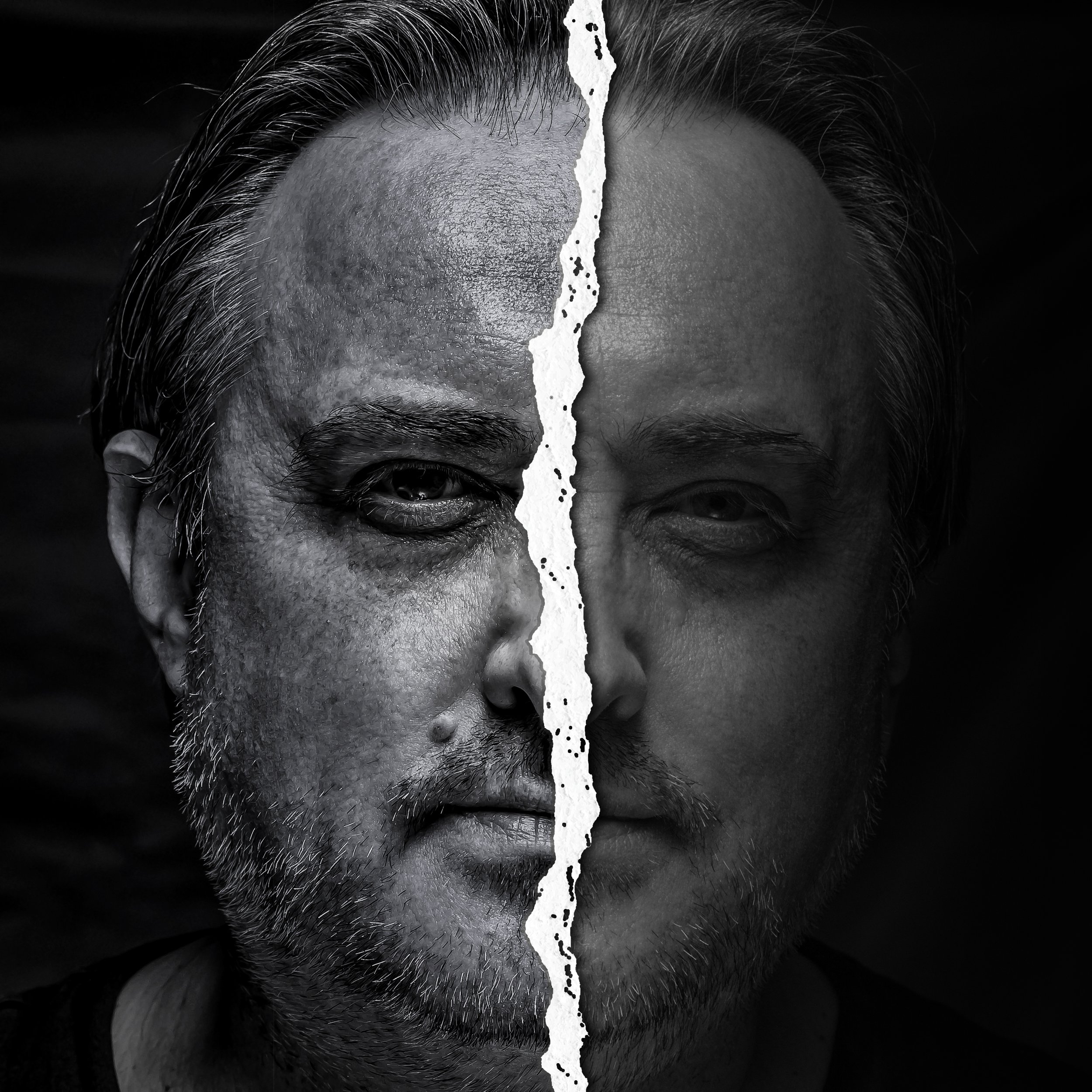
Did you know that the world’s first photomontage was created in 1858 by superimposing negatives on top of each other?
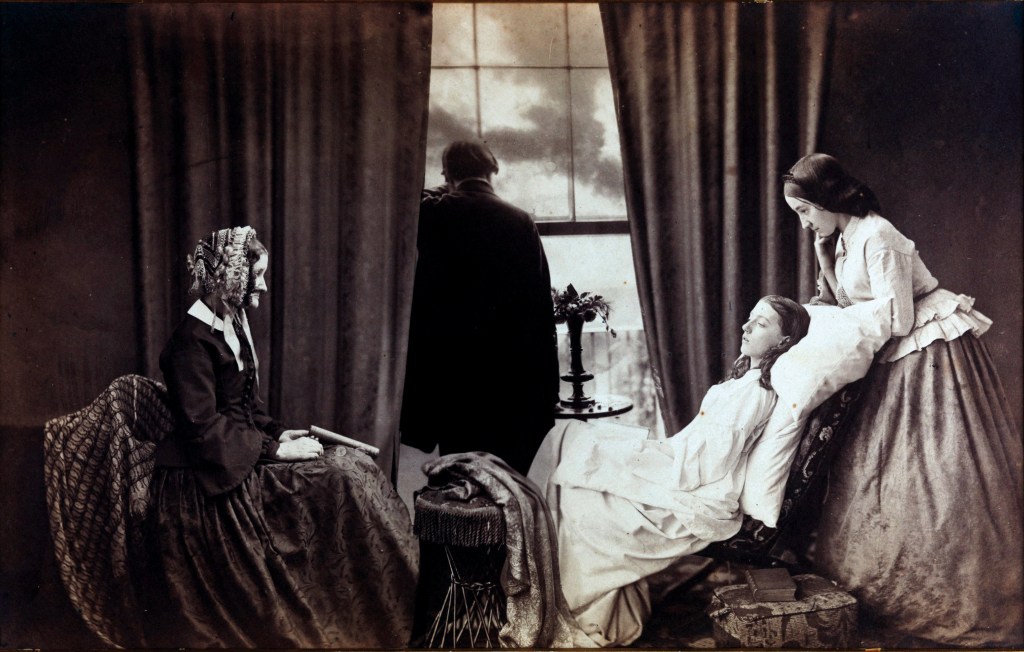

Henry Peach Robinson1 (1830 – 1901) is considered a pioneer in this field. He was especially interested in mixing photography and painting. In creating his works, the Father of Pictorialism2 imitated the paintings of painters.
Robinson’s best-known and most controversial work is the photomontage Dying Woman, created using five negatives. The photograph depicts a young woman dying of consumption.
- Henry Peach Robinson (9 July 1830, Ludlow, Shropshire – 21 February 1901, Royal Tunbridge Wells, Kent) was an English pictorialist photographer best known for his pioneering combination printing – joining multiple negatives or prints to form a single image; an early example of photomontage. He engaged in contemporary debates in the photographic press and associations about the legitimacy of ‘art photography’ and in particular the combining of separate images into one. ↩︎
- Pictorialism is an international style and aesthetic movement that dominated photography during the later 19th and early 20th centuries. There is no standard definition of the term, but in general it refers to a style in which the photographer has somehow manipulated what would otherwise be a straightforward photograph as a means of creating an image rather than simply recording it. Typically, a pictorial photograph appears to lack a sharp focus (some more so than others), is printed in one or more colours other than black-and-white (ranging from warm brown to deep blue) and may have visible brush strokes or other manipulation of the surface. For the pictorialist, a photograph, like a painting, drawing or engraving, was a way of projecting an emotional intent into the viewer’s realm of imagination. ↩︎
 Couple of Words
Leave a comment