
From 1934 to 1976, Sweden carried out forced sterilisation of girls as part of a program to fight for the purity of the nation.
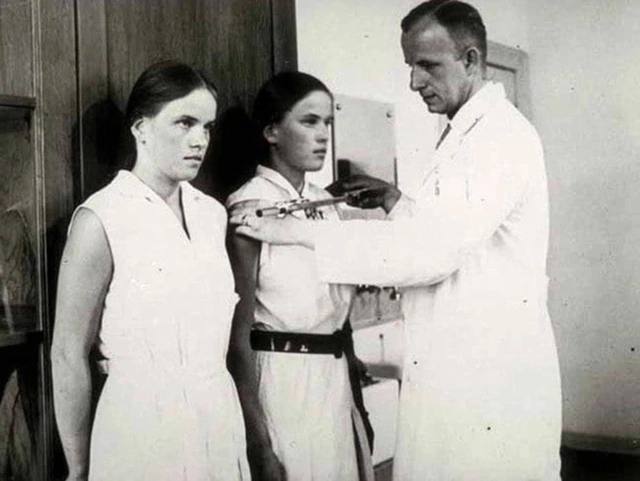
Fifteen-year-old Swedish girls were sterilised if they did not meet the “principles of generally accepted ethics.” These criteria included disobedience, feeblemindedness, “low intelligence,” and being born from mixed marriages. One of the girls was sterilised because she could not read the text on the school board. She was considered mentally retarded, but it later turned out that she simply needed glasses. It was only in 1999 that Sweden finally began compensating some of its victims.
Neighboring countries, Norway and Denmark, also carried out similar programs, sterilising 40,000 and 6,000 women, respectively. Eugenics[ 1 ] was also widespread in Canada and the United States: in North Carolina alone, more than 7,700 women were sterilised by 1973, most of whom were African-American.
- Eugenics is a set of beliefs and practices that aim to improve the genetic quality of a human population. Historically, eugenicists have attempted to alter the frequency of various human phenotypes by inhibiting the fertility of people and groups they considered inferior, or promoting that of those considered superior. The contemporary history of eugenics began in the late 19th century, when a popular eugenics movement emerged in the United Kingdom, and then spread to many countries, including the United States, Canada, Australia, and most European countries. In this period, people from across the political spectrum espoused eugenic ideas. Consequently, many countries adopted eugenic policies, intended to improve the quality of their populations’ genetic stock. Historically, the idea of eugenics has been used to argue for a broad array of practices ranging from prenatal care for mothers deemed genetically desirable to the forced sterilisation and murder of those deemed unfit. – Wikipedia ↩︎


 Couple of Words
Leave a comment