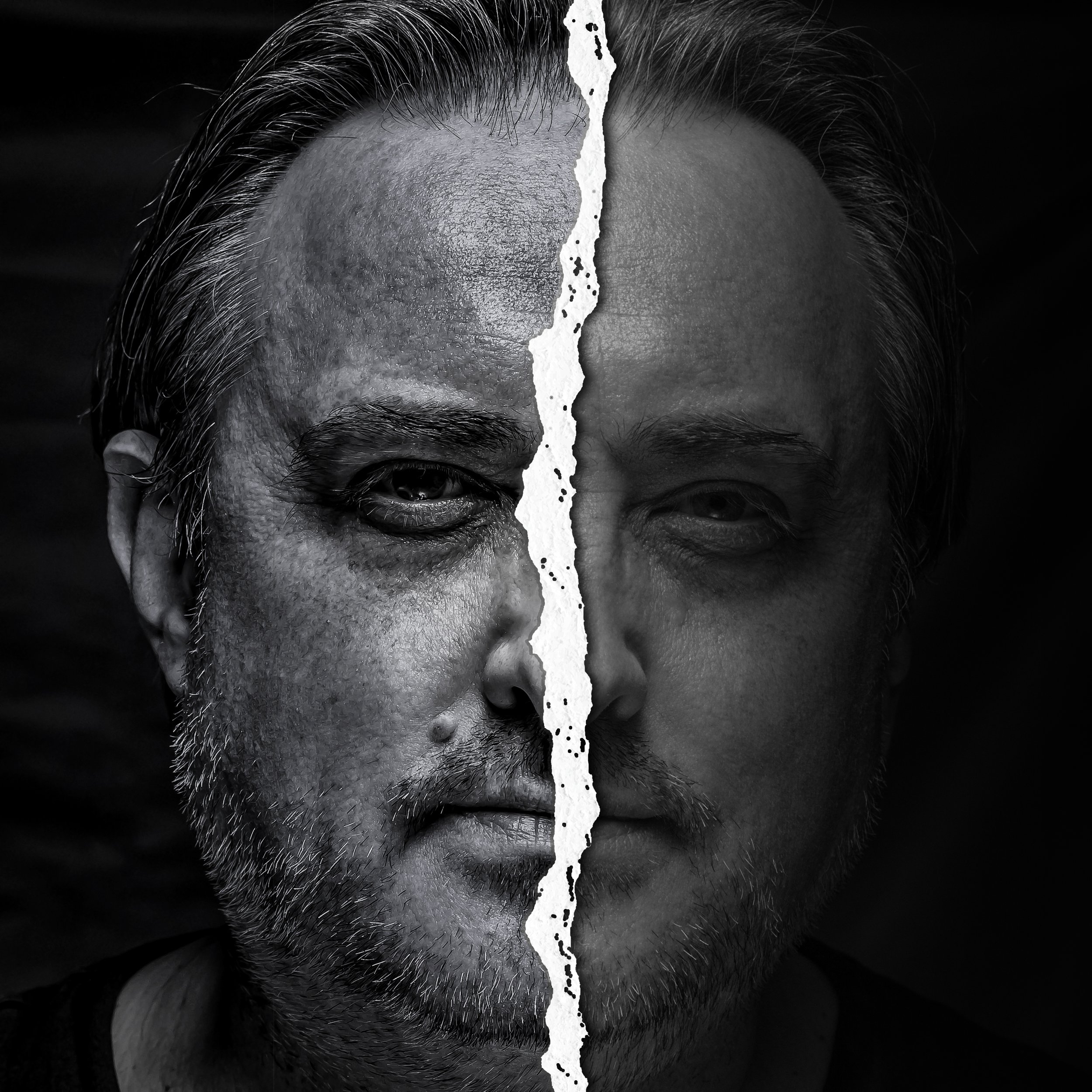
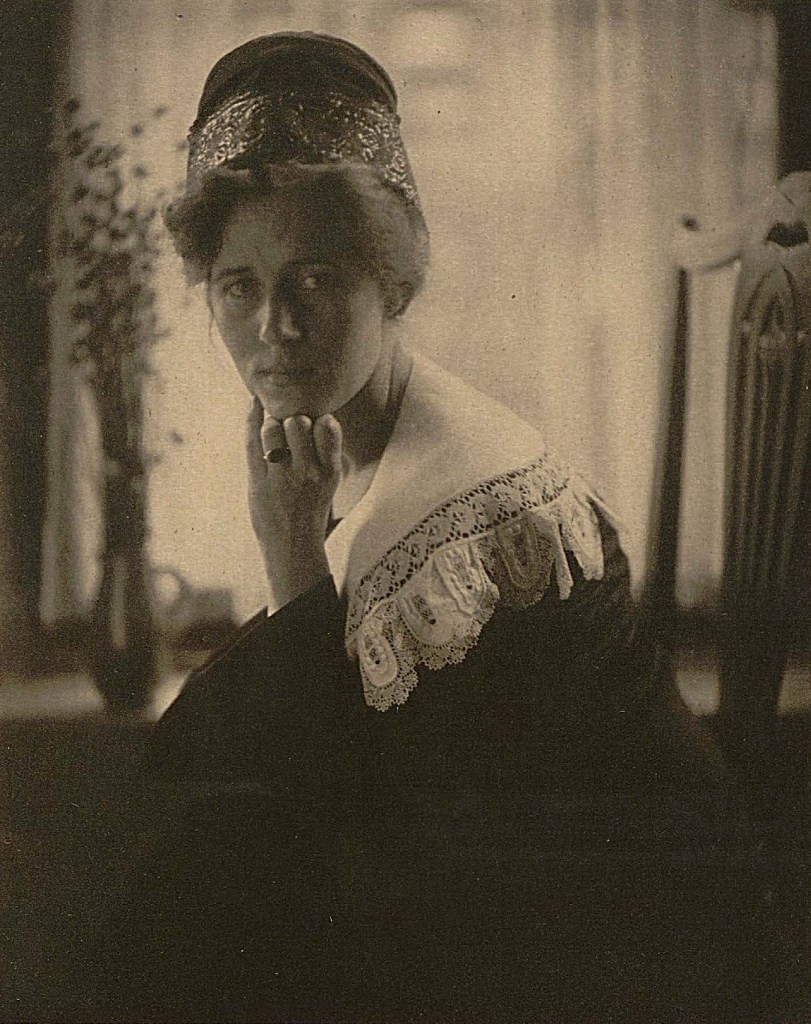
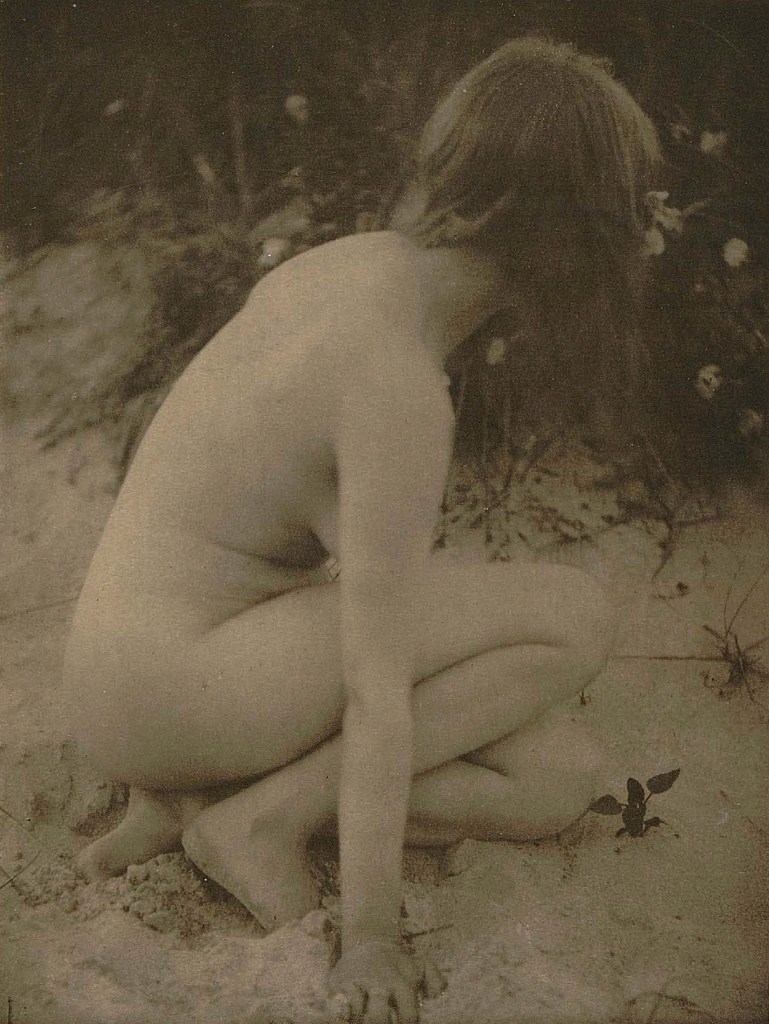
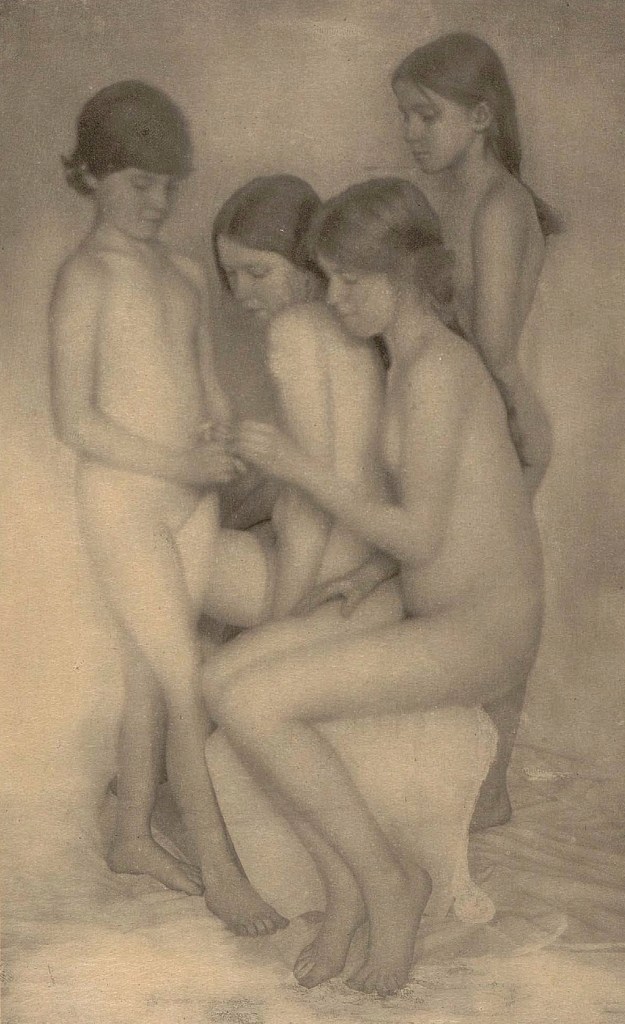
As Alice Boughton’s[1] became noticed by famous photographers in her field, like Alfred Stieglitz[2]. He knew of and admired her work and by 1902 he included two of her works in the inaugural exhibition at his 291 Art Gallery[3] in New York City. This relationship continued for many years as in 1906, Boughton was appointed as a Fellow of the Photo-Secession[4]. The Photo-Secession artists worked to “secede” from what they thought was the mainstream art of the time. The following year Stieglitz gave her, along with fellow photographers C. Yarnall Abbott and William B. Dyer, an exhibition at the Little Galleries. In 1909 she had six of her photographs (I. Danish Girl; II Dawn; III Sand and Wild Roses; IV Nature; V Nude; VI The Seasons.) and an essay called “Photography, A Medium of Expression” published in Stieglitz’s journal Camera Work (No 26, April, 1909).[5]



When Stieglitz closed “291” he had several thousand unsold copies of Camera Work, along with more than 8,000 unsold copies of 291. He sold most of these in bulk to a ragpicker, and he gave away or destroyed the rest. Almost all of the copies that remain today came from the collections of the original subscribers.
- Alice Boughton (14 May 1866 – 21 June 1943) was an early 20th-century American photographer known for her photographs of many literary and theatrical figures of her time. She was a Fellow of Alfred Stieglitz’s Photo-Secession, a circle of photographers whose artistic efforts succeeded in raising photography to a fine art form. ↩︎
- Alfred Stieglitz (January 1, 1864 – July 13, 1946) was an American photographer and modern art promoter who was instrumental over his 50-year career in making photography an accepted art form. In addition to his photography, Stieglitz was known for the New York art galleries that he ran in the early part of the 20th century, where he introduced many avant-garde European artists to the U.S. ↩︎
- 291 is the commonly known name for an internationally famous art gallery that was located in Midtown Manhattan at 291 Fifth Avenue in New York City from 1905 to 1917. Originally called the “Little Galleries of the Photo-Secession“, the gallery was established and managed by photographer Alfred Stieglitz. ↩︎
- The Photo-Secession was an early 20th century movement that promoted photography as a fine art in general and photographic pictorialism in particular.
A group of photographers, led by Alfred Stieglitz and F. Holland Day in the early 20th century, held the then controversial viewpoint that what was significant about a photograph was not what was in front of the camera but the manipulation of the image by the artist/photographer to achieve his or her subjective vision. The movement helped to raise standards and awareness of art photography.
The group is the American counterpart to the Linked Ring, an invitation-only British group which seceded from the Royal Photographic Society. ↩︎ - Camera Work was a quarterly photographic journal published by Alfred Stieglitz from 1903 to 1917. It presented high-quality photogravures by some of the most important photographers in the world, with the goal to establish photography as a fine art. It was called “consummately intellectual”, “by far the most beautiful of all photographic magazines” and “a portrait of an age [in which] the artistic sensibility of the nineteenth century was transformed into the artistic awareness of the present day.”
Issues and contents – Number 26, April 1909
Photographs: six by Alice Boughton; one by J. Craig Annan; one by George Davison.
Texts: Benjamin de Casseres, “Caricature and New York”; Sir (Caspar) Purdon Clarke on “Art” and Oscar Wilde on “The Artist”; J. Nilsen Laurvik on the show International Photography at the National Arts Club: miscellaneous others. ↩︎


 Couple of Words
Leave a comment